

The Hidden Role of Humidity on the Production Floor
Walk through any food processing facility and you will see stainless steel equipment, automated lines, and strict sanitation procedures. What you cannot see as easily is humidity, yet it influences almost everything that happens on the floor.
When humidity drifts out of range, problems appear quickly. Products lose moisture or absorb too much of it. Packaging sticks, wrinkles, or fails to seal. Dust becomes airborne, while condensation forms where it does not belong. These issues slow production, increase waste, and create food safety concerns.
Food processing humidity control gives manufacturers a way to stabilize their environment. With the right moisture levels, products stay consistent, packaging performs as expected, and operations run more smoothly. Packaging humidity management is not just a technical detail. It is a practical tool that protects food quality, improves efficiency, and supports long-term reliability in food manufacturing
How Humidity Shapes Food Processing Results
Humidity affects food long before it reaches the package. Moisture in the air interacts with ingredients, exposed product surfaces, and cooling lines throughout production.
Too much humidity encourages condensation and creates conditions where bacteria and mold can thrive. Air that is too dry pulls moisture from food, changing texture, weight, and appearance. Neither extreme works in a busy production environment.
Humidity in food manufacturing needs balance. Bakers rely on controlled moisture to keep products soft after baking. Powder processors need enough humidity to reduce static without causing clumping. Produce packers depend on stable moisture to slow dehydration and extend freshness. Food processing humidity control helps each product behave the way it should, batch after batch.
Keeping Products Consistent and Fresh
When humidity drops too low, food dries out faster than intended. Crusts harden, powders become dusty, and packaging materials lose flexibility. When humidity climbs too high, condensation forms and spoilage accelerates.
Maintaining the right moisture level prevents these swings. Balanced humidity protects texture, flavor, and appearance while preventing spoilage with humidity control strategies. This consistency directly supports longer shelf life and fewer rejected products.
Improving the Work Environment
People feel the effects of humidity just as much as products do. Extremely dry or damp air makes processing areas uncomfortable and harder to work in.
Stable food processing environment humidity improves comfort, visibility, and air quality. When conditions feel better, teams make fewer mistakes and lines run more consistently.
How Humidity Impacts Product Weight and Profitability
In many food operations, product weight directly affects revenue. Moisture loss may seem minor, but over time it adds up to measurable financial impact.
When air is too dry, fresh produce, meat, baked goods, and prepared foods lose moisture faster than intended. That moisture loss shows up as reduced weight, even when the product still looks acceptable. For products sold by weight, this shrink directly reduces yield and profit.
Consistent food processing humidity control helps slow moisture loss during cooling, holding, and packaging. By maintaining stable air conditions, facilities protect product weight, preserve appearance, and reduce unnecessary shrink. In produce operations especially, even small improvements in moisture retention can translate into significant cost savings across high volumes.
Packaging also plays a role. Effective packaging humidity management supports stable product weight after sealing by reducing dehydration and preventing condensation-related damage. Together, these controls help processors deliver products that meet weight targets, pricing expectations, and customer standards.
Moisture Control Where Packaging Matters Most
Packaging is often where humidity problems become impossible to ignore. Materials react immediately to moisture changes, and small issues quickly turn into downtime.
High humidity causes condensation on film, cartons, and finished packages. This leads to sticking, weakened materials, and poor presentation. Low humidity creates static, attracts dust, and interferes with sealing and labeling.
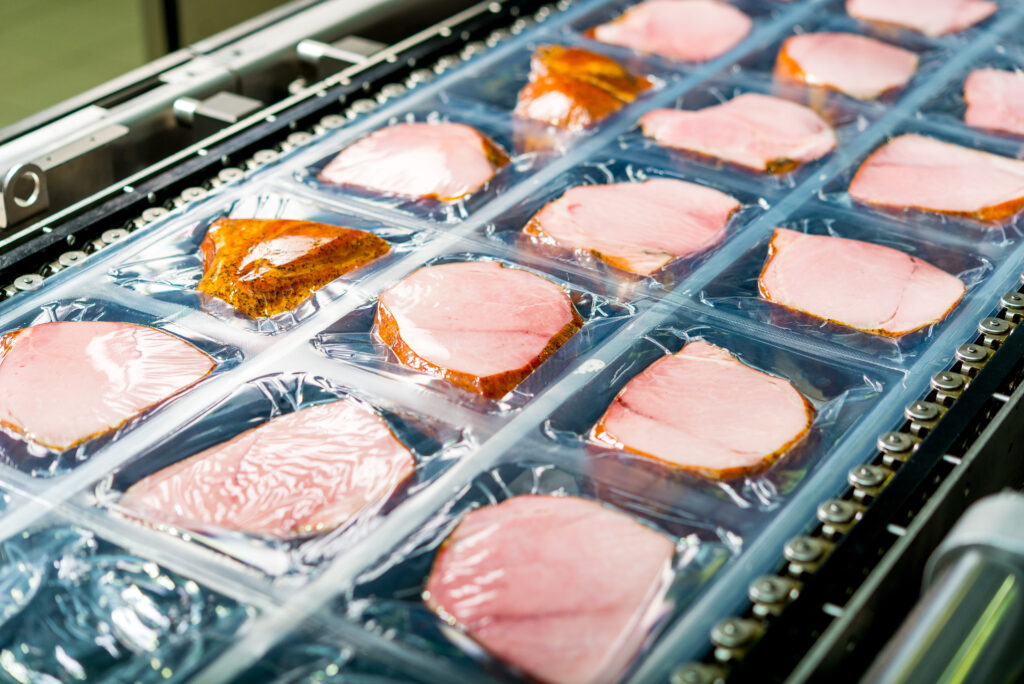
Packaging humidity management keeps this stage predictable. Dry foods package more cleanly with controlled moisture. Chilled or moist products avoid condensation when humidity stays stable. In both cases, humidity in food packaging plays a major role in efficiency and appearance.
Reducing Dust and Airborne Debris
Dry air allows dust to linger in the air and settle where it should not. Over time, this increases contamination risks and maintenance demands.
Food processing humidity control helps keep particles grounded. Cleaner air supports food safety goals and reduces wear on equipment.
Supporting Reliable Seals and Labels
Seals and labels rely on consistent conditions. Adhesives bond better when humidity stays within range. Heat seals close evenly instead of wrinkling or weakening.
By managing moisture, facilities protect food packaging seal integrity and reduce rework, scrap, and customer complaints.
Modern Humidity Solutions for Food Facilities
Many facilities now rely on high-pressure humidification for food processing because it delivers fast, precise control.
These systems release ultra-fine droplets that evaporate instantly. Automated controls respond to real-time conditions and adjust output as needed. Integration with HVAC or building management systems allows operators to manage humidity in food manufacturing across multiple zones.
MicroCool High-pressure systems respond quickly to changing production demands, use water efficiently, and scale easily as facilities grow. Automated humidity control in food manufacturing removes guesswork and keeps conditions stable throughout the day.
What Humidity Control Looks Like in Practice
The benefits of food processing humidity control become clear on the production floor.
A commercial bakery stabilized humidity during cooling and packaging. Products stayed softer, shelf life improved, and waste dropped.
A powder packaging operation reduced static and dust by adjusting moisture levels. Equipment ran cleaner, and contamination risks decreased.
A fresh produce facility maintained consistent humidity during packing. Produce retained moisture, looked better, and lasted longer in transit. These real-world examples show how humidity management supports quality and efficiency across food manufacturing.
Simple Ways to Keep Humidity Under Control
Effective humidity management does not rely on guesswork. It starts with accurate monitoring and clear setpoints.
Regular inspection and calibration keep humidification systems working properly. Sensors, pumps, and controls need routine attention to deliver reliable results.
Humidity control works best alongside temperature and airflow management. When these systems work together, facilities maintain stable conditions that support food safety, product quality, and operational efficiency.
Also Read: The Complete Guide to Manufacturing Humidification: Protecting Quality, Efficiency, and Safety
Why Humidity Control Deserves More Attention
Food processing humidity control influences product consistency, shelf life, packaging performance, and daily efficiency.
Strong packaging humidity management reduces waste, protects food packaging seal integrity, and keeps production moving. High-pressure humidification for food processing gives facilities the control they need to meet modern demands.
If humidity has become an afterthought, it may be time to take a closer look. Improving humidity control in food manufacturing often delivers quick, measurable improvements across quality, safety, and operations.